How Road Salt Damages Garage Floors
If you live in Northeast Ohio, road salt is unavoidable. Every winter, vehicles carry snow, slush, ice melt, and deicing chemicals directly into garages across the region. While most homeowners understand that salt can cause rust on vehicles, many don't realize it can be just as damaging to concrete.
Over time, road salt contributes to pitting, scaling, spalling, cracking, and surface deterioration. What often begins as a few rough spots near the garage door can eventually turn into widespread damage across the entire floor.
We frequently hear from homeowners researching garage floor coatings because their concrete is beginning to show signs of wear after years of winter exposure. Understanding how road salt affects concrete can help you protect your floor before minor damage becomes a costly repair project.
Let's take a closer look at why road salt is so hard on garage floors and what homeowners can do to prevent long-term deterioration.
Why road salt is harder on concrete than most homeowners realize
Many people assume road salt simply sits on the surface of the concrete until it dries. In reality, the problem goes much deeper.
Concrete is naturally porous. Even though it appears solid, it contains thousands of tiny pores and capillaries that absorb moisture. Every time a vehicle enters the garage carrying snow and slush, water mixed with salt begins working its way into those pores.
Modern deicing products often contain sodium chloride, calcium chloride, magnesium chloride, or a combination of chemicals designed to lower the freezing point of water. While effective on roads, these materials create a harsh environment for concrete surfaces.
As moisture repeatedly enters and exits the slab, the concrete experiences ongoing stress. Over time, this weakens the surface and creates conditions that allow scaling, pitting, and spalling to develop.
The process is gradual, which is why many homeowners don't recognize the damage until it becomes obvious.
How freeze-thaw cycles accelerate concrete deterioration
Road salt alone isn't usually the primary culprit. The real problem is the combination of road salt and Northeast Ohio's freeze-thaw cycles.
During winter, temperatures frequently move above and below freezing. Moisture absorbed into the concrete expands when it freezes and contracts when it thaws. This constant movement creates pressure within the slab.
As the concrete expands and contracts, microscopic damage begins to form. Over time, those tiny defects grow larger and eventually become visible on the surface.
Common effects of freeze-thaw damage include:
-
- Surface scaling
- Small pits and holes
- Flaking concrete
- Cracking and chipping
- Spalling and surface separation
Because road salt allows moisture to remain active at lower temperatures, it often increases the severity of freeze-thaw damage. This is one reason garage floors in Ohio tend to deteriorate much faster than floors in warmer climates.
The warning signs of salt damage homeowners should watch for
Concrete damage rarely appears overnight. Most garage floors show warning signs long before major repairs become necessary.
Recognizing these symptoms early can help homeowners address problems before the damage spreads.
Common warning signs include:
-
- White salt residue on the surface
- Rough or chalky concrete texture
- Small pits forming near the garage door
- Flaking or peeling concrete
- Exposed aggregate becoming visible
- Surface cracks and chips
The area closest to the garage door is often the first place damage appears because it receives the highest concentration of snow, slush, and road salt.
Many homeowners ignore these early signs because the floor still seems functional. Unfortunately, once deterioration begins, moisture penetration typically increases and the damage accelerates.
Why some garage floors fail faster than others
Road salt is especially hard on garage floors because concrete is naturally porous. Every winter, vehicles bring snow, slush, and deicing chemicals into the garage where moisture sits on the surface and gradually works its way into the slab.
As temperatures fluctuate above and below freezing, that trapped moisture expands and contracts. Over time, the repeated pressure weakens the surface of the concrete, leading to scaling, pitting, and eventually larger areas of deterioration.
Can salt-damaged concrete be repaired?
In many cases, yes.
One of the biggest misconceptions homeowners have is that once concrete begins deteriorating, the entire slab must be replaced.
While replacement is occasionally necessary for severe structural issues, most salt-related surface damage can often be repaired successfully.
The repair process usually begins with mechanical diamond grinding to remove weak concrete and create a stable surface. Damaged areas are then repaired using specialized materials designed to restore the floor before a coating system is installed.
Depending on the severity of the damage, repairs may involve:
-
- Filling pits and surface voids
- Repairing spalled areas
- Addressing cracks and minor surface defects
- Removing deteriorated concrete
The goal is to create a solid foundation capable of supporting a long-lasting coating system.
This is one reason DIY repair methods often fail. Surface-level patching rarely addresses the underlying issues that contributed to the deterioration in the first place.
How garage floor coatings help protect against future damage
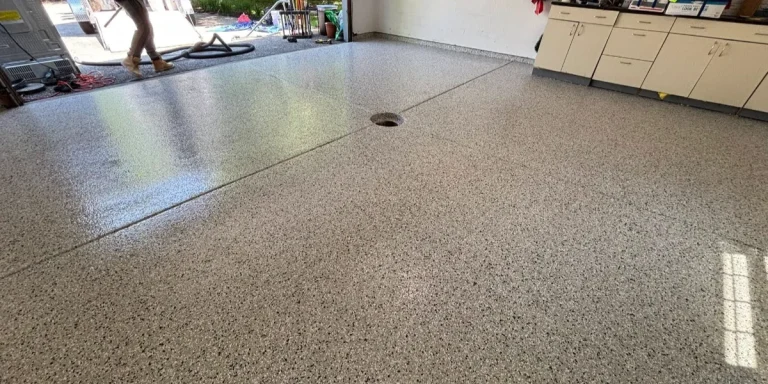
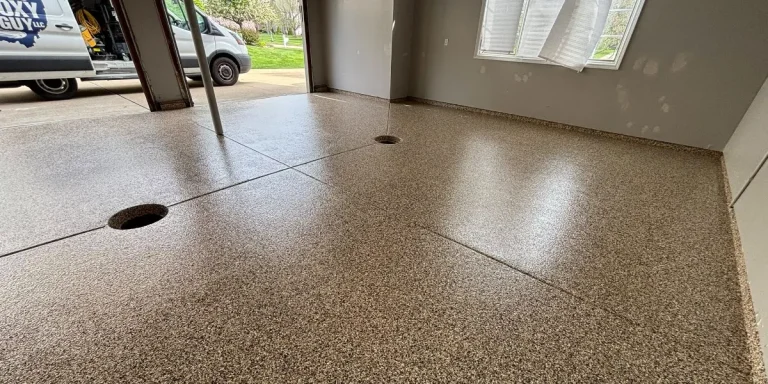
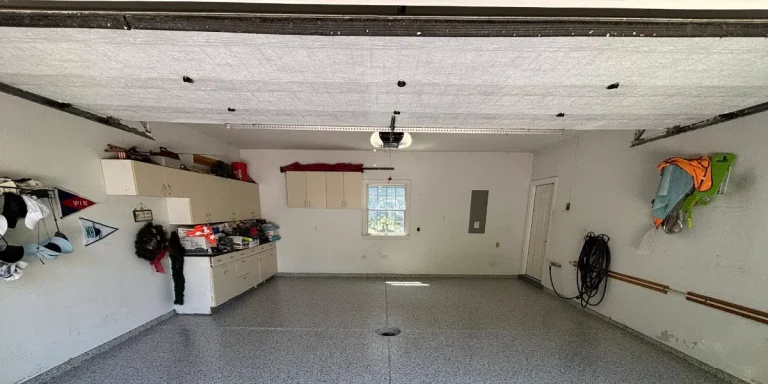
Once repairs are completed, many homeowners choose to install a professional garage floor coating system to help prevent future damage.
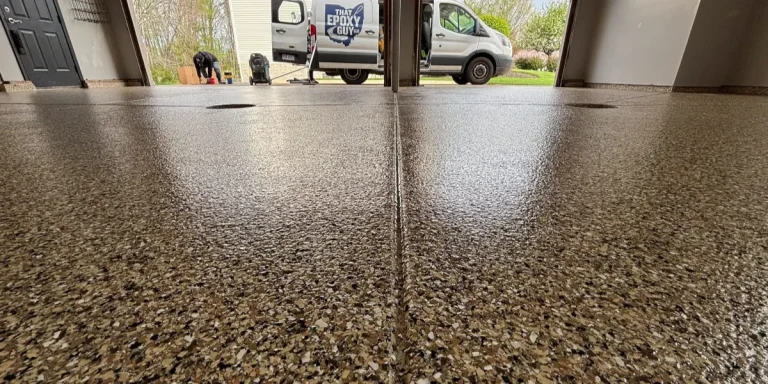
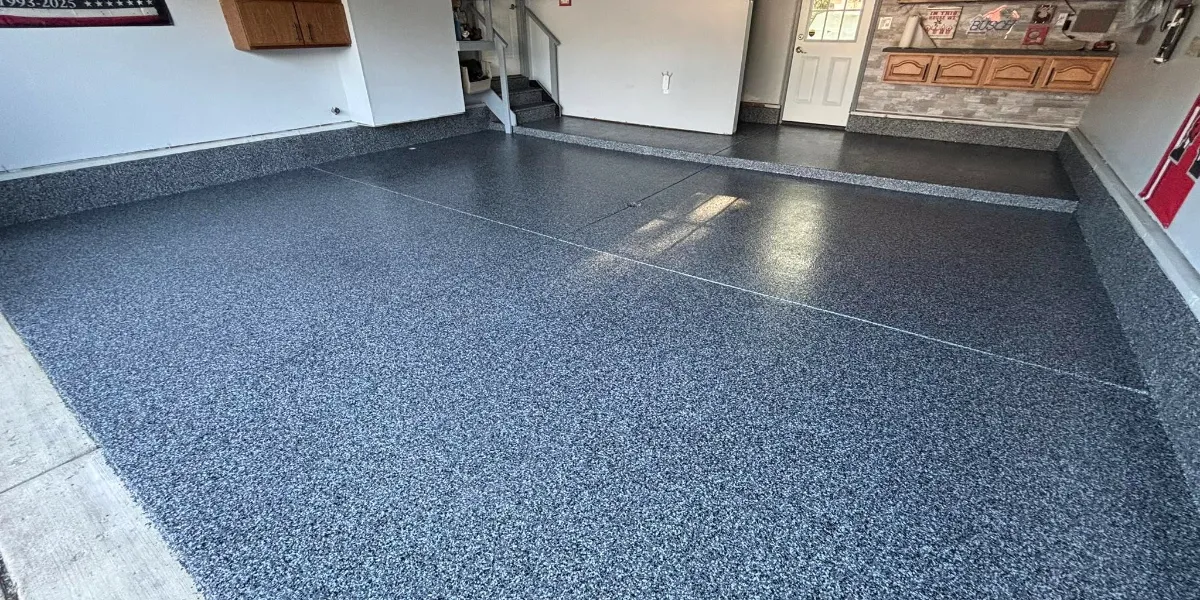
A properly installed coating creates a protective barrier between the concrete and the harsh conditions it encounters every winter.
Rather than allowing moisture and road salt to penetrate the slab, the coating helps shield the surface from direct exposure.
Benefits of a professionally installed coating system include:
-
- Reduced moisture penetration
- Improved resistance to road salt exposure
- Easier cleaning and maintenance
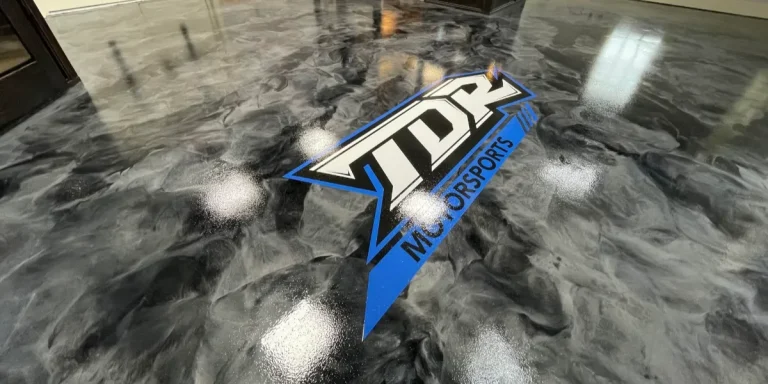
- Enhanced appearance
- Long-term protection for the underlying concrete
The key is proper preparation. Coatings applied over deteriorated or improperly prepared concrete often fail prematurely. Repairing and preparing the slab correctly is what allows the system to perform as intended.
What does it cost to repair and protect a garage floor?
The cost depends on the condition of the concrete and the amount of repair work required.
A garage floor showing only minor signs of salt damage will typically require less preparation than one with extensive pitting, scaling, or spalling.
Several factors affect overall pricing:
-
- Garage size
- Severity of existing damage
- Required repairs
- Coating system selection
- Decorative finish options
Homeowners researching pricing can review our Concrete Coating Cost Guide to better understand the factors that affect project costs, including floor condition, repair requirements, coating system selection, and overall project size.
When should you address salt damage?
The best time to address salt damage is before major deterioration occurs.
In our experience, homeowners often wait until the concrete begins actively flaking or large areas of pitting become visible. By that point, repairs are usually more extensive than they would have been a few years earlier.
Protecting a garage floor makes sense when:
-
- The floor is beginning to show signs of wear
- You regularly park vehicles inside during winter
- You want to prevent future concrete repairs
- You want a cleaner, more attractive garage
An experienced contractor can evaluate the condition of the slab and determine whether repairs, coatings, or additional corrective work are necessary.
Serving homeowners throughout Northeast Ohio
We install garage floor coatings and concrete coating systems throughout:
We also install basement floor coatings, patio coatings, pool deck coatings, and commercial concrete coating systems throughout surrounding Northeast Ohio communities.
So, how does road salt damage garage floors?
Road salt damages garage floors by allowing moisture and deicing chemicals to repeatedly penetrate the concrete surface. Combined with Ohio's freeze-thaw cycles, this leads to scaling, pitting, spalling, cracking, and gradual surface deterioration. Left untreated, the damage often becomes progressively worse and more expensive to repair.
If your garage floor is showing signs of road salt damage, pitting, scaling, or surface deterioration, contact That Epoxy Guy for a free estimate. We'll evaluate the condition of your concrete, explain your options, and recommend the best solution to help protect your garage floor for years to come.