Can You Epoxy a Pitted Garage Floor?
If your garage floor is covered with small pits, surface spalling, or rough areas, you may be wondering whether an epoxy coating is still an option.
We hear this question often from homeowners throughout Northeast Ohio who are researching garage floor coatings. The good news is that pitted concrete can usually be coated successfully, but only when the floor is properly repaired and prepared beforehand.
Let's take a closer look at what causes pitting, when epoxy is a good solution, and what homeowners should know before moving forward.
Why garage floors become pitted in the first place
Garage floors are exposed to a lot over the years.
Road salt, freeze-thaw cycles, moisture, vehicle traffic, dropped tools, and poor finishing during the original concrete pour can all contribute to surface deterioration.
As the concrete ages, the top layer may begin breaking apart. Small holes form, the surface becomes rough, and sections of the slab may start flaking away.
In Northeast Ohio, winter conditions are one of the biggest contributors. Water enters tiny pores in the concrete, freezes, expands, and gradually damages the surface.
The result is a garage floor that looks worn out long before the slab itself has reached the end of its lifespan.
Can epoxy be applied over a pitted garage floor?
In many cases, yes. However, the condition of the concrete matters.
-
- Minor pitting can often be repaired during preparation
- Moderate surface damage can usually be patched and resurfaced
- Severe structural deterioration may require more extensive repairs
- Active moisture issues must be addressed before coating
The biggest misconception homeowners have is that epoxy simply hides damaged concrete.
It doesn't.
A professional coating system follows the shape of the concrete below it. If pits, cracks, and defects aren't repaired correctly, they'll often remain visible through the finished floor.
That's why preparation is the most important part of any successful garage floor coating project.
What happens if pitting is ignored?
Some contractors try to save time by coating directly over damaged concrete.
Unfortunately, this usually leads to disappointing results.
Skipping repairs can create problems such as:
-
-
- Visible holes and surface defects
- Uneven coating thickness
- Premature wear in damaged areas
- Reduced appearance and durability
-
The coating itself may still bond, but the finished floor often looks rough and unfinished.
In our experience, homeowners investing in a new garage floor expect a clean, attractive surface. That starts with restoring the concrete before any coating is installed.
How pitted concrete is repaired before coating
Professional preparation involves much more than filling holes with a hardware store patching compound.
The first step is mechanical diamond grinding. This removes weak concrete and creates the proper profile needed for coating adhesion.
After grinding, damaged areas are evaluated individually.
Small pits may be filled with specialized repair materials. Larger spalled areas often require rebuilding sections of the surface before coatings are applied.
The goal is to create a stable, uniform substrate capable of supporting the entire coating system.
This is one reason DIY epoxy kits frequently fail. Most homeowners simply don't have access to the preparation equipment or repair materials needed to properly address concrete damage.
You can learn more about our preparation process on our garage floor coating service page.
Why surface preparation matters more than the coating itself
Many people spend hours comparing coating products while overlooking the condition of the concrete.
In reality, the substrate determines whether the floor succeeds or fails.
A properly prepared slab allows coatings to bond deep into the concrete surface. Industry coating systems typically require mechanical profiling through diamond grinding to achieve proper adhesion.
Without that profile, coatings are more likely to peel, chip, or delaminate over time.
For pitted floors, preparation becomes even more important because damaged concrete often contains weak areas that must be removed before installation.
This is why professional installers spend significantly more time preparing the floor than actually applying coatings.
Are decorative flake systems a good option for pitted floors?
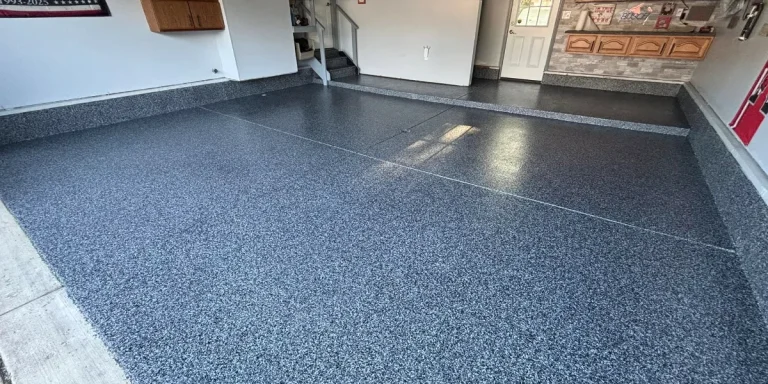
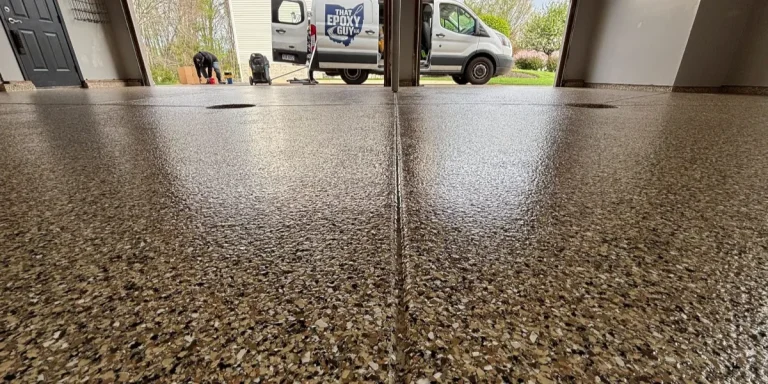
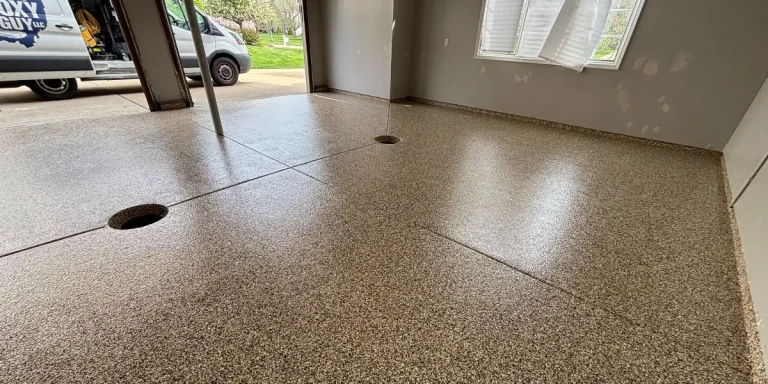
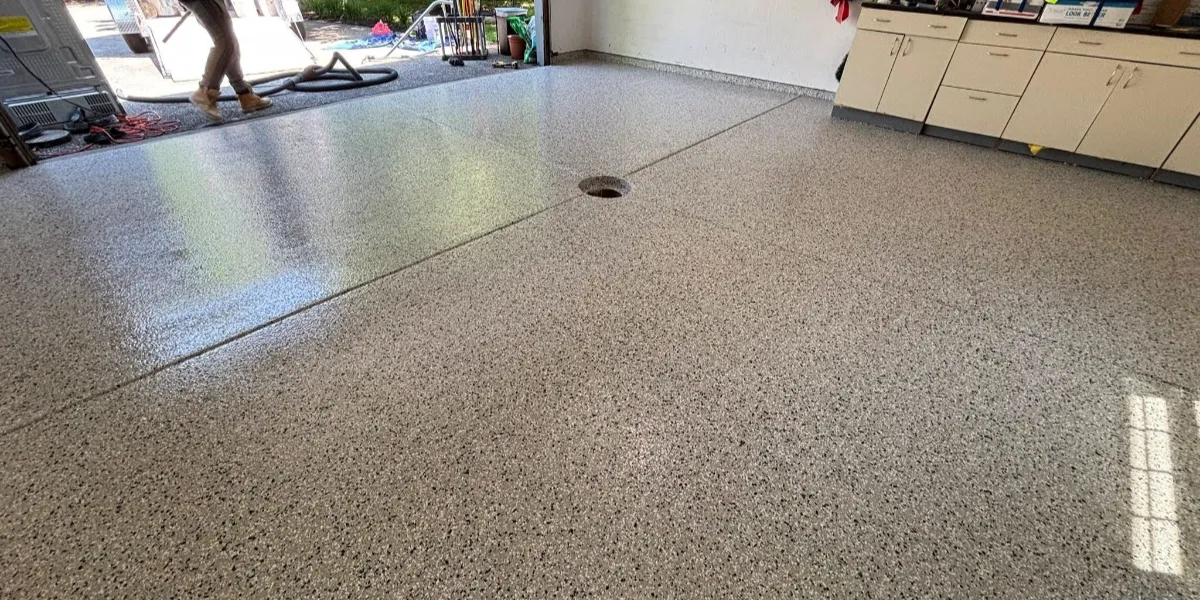
In many cases, decorative flake systems are one of the best solutions for previously damaged garage floors.
Unlike thin paint-like coatings, a full broadcast flake system creates a thicker finished surface that helps disguise minor imperfections while providing excellent durability.
Many homeowners choose systems similar to those used in our garage floor coating systems because they offer:
-
- Excellent durability against vehicle traffic
- Improved stain resistance
- A more uniform appearance
- Better concealment of minor repaired areas
The decorative flakes also help create visual texture and depth that many homeowners prefer over a plain solid-color floor.
How long will a repaired and coated floor last?
When the concrete is structurally sound and properly repaired, a professionally installed coating system can provide many years of service.
Longevity depends on several factors:
-
- The condition of the original slab
- The quality of preparation
- The coating system selected
- Exposure to moisture and chemicals
- Ongoing maintenance practices
Garage floors generally benefit from routine sweeping and occasional cleaning to prevent abrasive dirt and debris from wearing the surface.
The good news is that coated floors are much easier to maintain than bare concrete because they resist staining and do not continuously shed dust.
What does it cost to coat a pitted garage floor?
The answer depends largely on the amount of repair work required.
A garage floor with minor pitting will typically cost less than one with extensive spalling, large cracks, or moisture-related deterioration.
Factors that affect pricing include:
-
- Garage size
- Severity of concrete damage
- Repair requirements
- Coating system selected
- Decorative finish options
Homeowners researching pricing can review our Concrete Coating Cost Guide to better understand the factors that affect project costs, including floor condition, repair requirements, coating system selection, and overall project size.
When does coating a pitted garage floor make sense?
In our experience, coating a pitted garage floor makes sense when:
-
- The slab is structurally sound
- Damage is mostly surface related
- You want to stop further deterioration
- You want a cleaner, easier-to-maintain garage
It may not make sense if the slab has major structural failure, severe settlement, or ongoing moisture issues that have not been corrected.
An experienced contractor can evaluate the floor and determine whether repairs and coating are the right solution.
Serving homeowners throughout Northeast Ohio
We install garage floor coatings and concrete coating systems throughout:
We also install basement floor coatings, patio coatings, pool deck coatings, and commercial concrete coating systems throughout surrounding Northeast Ohio communities.
So, can you epoxy a pitted garage floor?
In most cases, yes. A pitted garage floor can often be successfully coated, but the quality of the finished result depends heavily on preparation and repairs. Simply covering damaged concrete rarely produces the appearance or durability homeowners expect. Proper grinding, patching, and surface restoration create the foundation for a coating system that looks better, lasts longer, and protects the concrete underneath.
If your garage floor is pitted, rough, or showing signs of deterioration, contact That Epoxy Guy for a free estimate. We'll evaluate the condition of your concrete, explain your options, and recommend the best solution for your garage and budget.