Best Floor Coatings for Auto Shops and Repair Bays
Auto repair shops put more stress on a floor than almost any other commercial environment.
Between vehicle traffic, dropped tools, oil leaks, chemical exposure, welding equipment, jacks, lifts, and constant foot traffic, shop floors take a beating every day. Choosing the wrong flooring system can lead to premature wear, safety issues, and costly downtime.
We frequently work with business owners throughout Northeast Ohio who are evaluating commercial epoxy flooring systems for automotive repair facilities, service bays, fleet maintenance shops, dealerships, and specialty vehicle businesses.
The good news is that modern coating systems can provide exceptional durability when properly selected and professionally installed.
Let's look at the best floor coating options for auto shops and what business owners should consider before making an investment.
What makes auto shop floors different?
Automotive environments create unique challenges that many commercial flooring systems are not designed to handle.
A typical repair facility experiences exposure to:
-
- Motor oil
- Brake fluid
- Transmission fluid
- Coolant
- Gasoline and solvents
- Heavy vehicle traffic
- Dropped tools and equipment
- Rolling toolboxes and floor jacks
In addition to durability, repair shops also need floors that are easy to clean, safe for employees, and capable of maintaining a professional appearance despite constant use.
This is why automotive facilities often require more robust systems than standard residential garage floor coatings.
Why bare concrete is often a problem in repair bays
Many older auto shops still operate on uncoated concrete floors.
While concrete is strong, it is also porous and susceptible to staining, contamination, and surface deterioration.
Over time, bare concrete can develop:
-
- Oil saturation
- Chemical staining
- Dusting and surface wear
- Pitting and spalling
- Difficult cleaning conditions
These issues can affect both appearance and functionality.
A professionally installed coating system helps seal the surface, improve cleanability, and protect the underlying concrete from ongoing damage.
What should an automotive floor coating provide?
Not every epoxy floor is appropriate for a repair facility.
The best automotive floor coating systems typically provide:
-
- Excellent chemical resistance
- High abrasion resistance
- Impact resistance
- Slip-resistant options
- Easy maintenance
- Long-term durability
The coating should also be matched to the facility's operations.
A dealership service department may have different requirements than a diesel truck shop, tire center, performance shop, or fleet maintenance facility.
Epoxy floor coatings for auto shops
Epoxy flooring remains one of the most popular options for automotive facilities.
When properly installed over mechanically prepared concrete, epoxy creates a durable surface capable of handling substantial traffic and chemical exposure.
Benefits of epoxy flooring include:
-
- Excellent adhesion to concrete
- Strong chemical resistance
- High compressive strength
- Attractive professional appearance
- Numerous color options
Many repair facilities use epoxy as part of a larger multi-layer flooring system that incorporates specialized topcoats for additional durability and chemical resistance.
Businesses researching options can learn more about our commercial epoxy flooring services and how different systems are selected based on facility needs.
Why polyaspartic topcoats are often used in automotive facilities
Many modern automotive flooring systems combine epoxy base layers with polyaspartic topcoats.
Polyaspartics offer several advantages for repair environments:
-
- Enhanced abrasion resistance
- Improved chemical resistance
- Fast return-to-service times
- Excellent stain resistance
- UV stability in areas with sunlight exposure
This combination often provides an excellent balance of durability, appearance, and long-term performance.
For facilities where downtime is expensive, fast-curing systems can be particularly valuable because they minimize business interruption during installation.
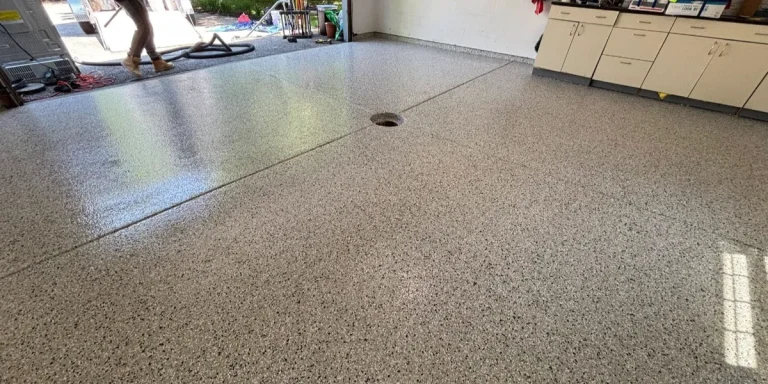
Are decorative flake systems suitable for repair bays?
In some automotive environments, yes.
Decorative flake floor systems are frequently used in:
-
- Dealership service areas
- Customer-facing repair facilities
- Showrooms
- Automotive detailing centers
- Performance shops
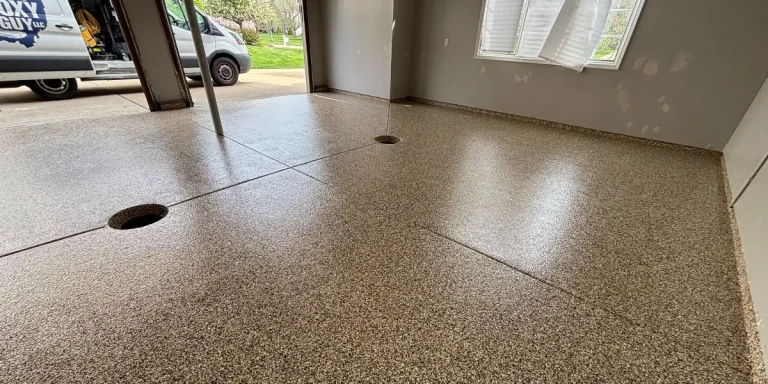
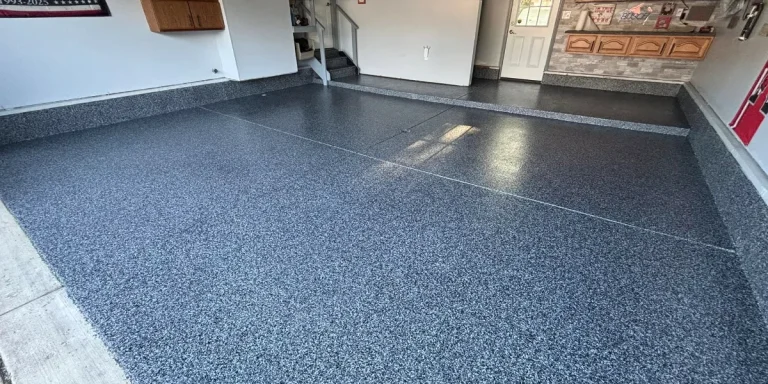
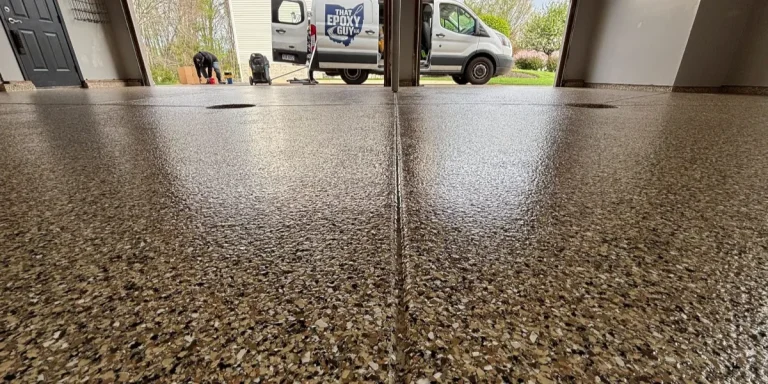
Flake systems provide a clean, professional appearance while helping hide minor dirt, dust, and wear.
Many business owners appreciate that these systems create a more polished appearance for customers while still offering strong durability.
However, extremely heavy-duty industrial environments may benefit from alternative systems specifically designed for severe service conditions.
What about heavy-duty industrial repair facilities?
Some repair facilities place extraordinary demands on their floors.
Examples include:
-
- Fleet maintenance operations
- Heavy equipment repair shops
- Truck maintenance facilities
- Municipal vehicle service centers
- Industrial equipment repair facilities
In these environments, flooring systems may require additional thickness, enhanced impact resistance, specialized chemical resistance, or heavy-duty aggregate systems.
The floor coating should be designed around actual operating conditions rather than simply selecting a product based on appearance.
Why preparation matters more than the coating itself
Many coating failures occur because of poor preparation rather than product selection.
Concrete in automotive facilities often contains years of contamination from oil, grease, solvents, and other chemicals.
Before installation, the floor typically requires:
-
- Diamond grinding
- Mechanical surface preparation
- Contaminant removal
- Crack repairs
- Joint repairs
- Moisture evaluation
As we discussed in our article on diamond grinding versus acid etching, proper preparation is critical for long-term coating performance.
Skipping preparation to save money often results in peeling, delamination, and premature failure.
Can automotive floor coatings improve safety?
Yes.
Safety is a major consideration in active repair environments.
Many commercial coating systems can incorporate texture and slip-resistant additives that improve traction while maintaining cleanability.
Benefits may include:
-
- Reduced slip hazards
- Improved visibility through reflective surfaces
- Clearly defined work areas
- Easier identification of fluid leaks
The proper balance between traction and cleanability is important because excessive texture can make maintenance more difficult.
How long do commercial automotive floor coatings last?
Service life depends on several factors:
-
- Traffic volume
- Vehicle types
- Chemical exposure
- Maintenance practices
- Preparation quality
- Coating system selection
A properly installed commercial flooring system can provide many years of service while protecting the concrete underneath.
Routine cleaning and maintenance help maximize the life of the coating and preserve its appearance.
How much does an auto shop floor coating cost?
Commercial flooring costs vary significantly depending on the facility and the system selected.
Factors affecting pricing include:
-
- Square footage
- Concrete condition
- Repair requirements
- Coating thickness
- Chemical resistance requirements
- Facility downtime constraints
Because every facility is different, a site visit is usually necessary to determine the most appropriate system and provide accurate pricing.
Businesses researching costs may also find our epoxy flooring cost guide helpful for understanding the variables that influence project costs.
When is a commercial floor coating worth the investment?
For many automotive businesses, the benefits extend beyond appearance.
A professionally installed floor coating can:
-
- Protect concrete from ongoing deterioration
- Improve shop appearance
- Simplify cleaning and maintenance
- Create a safer work environment
- Present a more professional image to customers
Whether you operate a small independent repair shop or a large fleet maintenance facility, choosing the right floor system can provide long-term operational benefits.
Serving automotive businesses throughout Northeast Ohio
We install commercial floor coating systems throughout:
In addition to automotive facilities, we install commercial epoxy flooring, commercial garage coatings, retail and office flooring systems, commercial kitchen floor coatings, garage floor coatings, and other specialty concrete coating systems throughout Northeast Ohio.
What is the best floor coating for auto shops and repair bays?
The best floor coating for an automotive facility depends on how the space is used, the types of vehicles serviced, and the level of chemical and traffic exposure. For most repair shops, professionally installed epoxy and polyaspartic systems provide an excellent combination of durability, chemical resistance, cleanability, and appearance. The key is selecting a system that matches the demands of the facility and ensuring the concrete is properly prepared before installation.
If you're considering a floor coating for your auto shop, repair bay, fleet facility, or service department, contact That Epoxy Guy for a free estimate. We'll evaluate your facility, discuss your operational needs, and recommend the best coating system for long-term performance.